III
Cash Flow Is Breath
Cash flow is the breath of the organization. Not revenue. Not profit. Cash. The discipline is learning to feel it, every day, before the day pulls you in.
How leaders build organizations that bend without breaking.
A finance book that uses yoga as its organizing metaphor — not for wellness, but for structural intelligence. Finance is the spine of the organization: invisible from the outside, load-bearing for everything else.
Written for the person who carries a number they cannot put down.
Independently published by the author. Writing now, editing through 2026, out in early 2027 — progress notes go to the list below.
No noise. An occasional note on the book's progress, early excerpts, and the launch — that's it.
For updates about the book only. Unsubscribe anytime.
Something went wrong. Please try again.
Thank you — you're on the list. Talk soon.
A palm tree looks thin and light, but the whole reason it stands up in a hurricane is that it bends. The trees that try to hold rigid are the ones that snap.
— From the prelude, The Palm Tree
The whole idea of the book in one short story — here in full, exactly as it opens the book.
I did not hear my dad’s phrase about the palm tree from my dad.
I read it in Footwear News. He had given an interview — to a reporter at the trade paper that had been covering him for years — and when the piece came out, there was the line. Be flexible like a palm tree. I remember reading it in Switzerland and thinking: he has been saying this his whole life without saying it.
A palm tree looks thin and light, but the whole reason it stands up in a hurricane is that it bends. The trees that try to hold rigid are the ones that snap. My dad was standing in every hurricane he walked into, for a fifty-plus-year career, because he knew how to bend. He did not tell me that growing up. He did not need to. He just lived it. When a reporter finally asked him the right question, he named it.
He was born in Haverstraw, New York, the son of a policeman. When his father died young, he and his mother — my Gram — moved to Cleveland, where they lived in a trailer park. He delivered papers. Then he took a stock-boy job and never left retail. Over his career, he became one of the biggest shoe people in the country, running the shoes business for Dillard’s. Bob Ulrich, who built Target into what it is, told me a couple of years ago that my dad was the best shoe guy in the country. My dad would never have said that about himself. He never once did.
What he actually taught me was not about being good at your job. It was about how to be in a room with anyone.
He could talk to the janitor and the CEO in exactly the same way. Not because he adjusted his voice to the audience — he did not — but because to him, there was no audience. There were people. That was the whole thing. I have flown on private planes with CEOs of Fortune 100 companies. I also know the names of the people who clean the office. I learned both of those things in the same house.
While he was running the business, I kept meeting people who worked with him — on the supplier side, inside Dillard’s, and on the customer end. They would tell me he was a good guy. And the line I heard, again and again, was some version of: if it was Joe, we were cool with it. They did not need to see the paperwork. They knew he was not trying to win at anyone else’s expense. He wanted the supplier to make money, he wanted Dillard’s to make money, and he wanted the customer to get the right shoe at the right price. If his name was on it, all three sides trusted it would work out.
None of this would have existed without my mom. She was from Cleveland too, the daughter of a fireman. She also lost her father young — they had that in common before they had anything else.
She worked as a ticket agent for United and American. That job is the reason we traveled. Paris, Japan, Hong Kong, Australia — and Hawaii again and again. We saw the world as a family because of my mom. That is where my love of adventure started. It is why I live in Switzerland today.
She had a work ethic that did not announce itself. She did not talk about how hard she worked. She just worked. My dad traveled constantly for the business — weeks of buying trips, store visits, markets, airports. My mom went with the flow of all of it, supportive every time he left and supportive every time he came back. A career like his does not get built by one person alone. It gets built by two people, quietly, over a long time. My dad knew that better than anyone. So do I.
The spine metaphor in this book is mine. The person who actually taught me what a spine looks like was my dad. A palm tree, standing for fifty years, bending in every storm that came through. My mom was what kept him standing between the storms.
— The Palm Tree, the prelude to The Financial Spine
In yoga, the spine is invisible from the outside — but everything depends on it. When it is aligned, movement is fluid and you can hold a hard pose for a long time. When it is misaligned, even simple movements become painful, and small compensations compound into injury. Organizations work exactly the same way.
Cash flow is the breath of the organization. Not revenue. Not profit. Cash. The discipline is learning to feel it, every day, before the day pulls you in.
How you pay people shapes how the whole organization stands. Misaligned incentives bend the spine in ways no strategy deck can later correct.
Credibility is cumulative. Precision builds trust. Trust builds optionality — the ability to act from a position of strength rather than desperation.
This was written for the person who carries a number they cannot put down — and for anyone who has felt the split between the analytical work that fills the day and whatever keeps them steady outside it, and wondered why those two things are kept in separate rooms.
You do not need a yoga practice to read it. You do not need to be a CFO either — though the closer you sit to the number, the more of these pages will feel like they were written about your week. You need to have been responsible for something that had to stay standing — and to have wondered what, exactly, was holding it up.
Daily, weekly, monthly, quarterly — specific enough to adopt as written, and honest about the three signals that you have lost it.
The real cost of a discount, the cash conversion cycle, covenant headroom under a downturn — arithmetic you can redo with your own numbers.
A signed term sheet is not capital. Count the delays. Chapter Nine is the one that cost the author his role.
Spine, breath, posture, the hold — words that mean the same thing in a close review and in a long pose.
Everything in it has been tested twice — once in a boardroom and once on a mat. The two tests kept agreeing with each other.
— From the introduction, Finance Is Not a Department
Four parts that build from the ground up — the way a spine does.
I did not come to yoga through wellness culture or spiritual seeking. I came to it because I needed a framework for holding tension without breaking.
— Patrick Brennan, The Financial Vinyasa
Five to ten minutes, every morning before the day pulls you in. Four numbers and four signals:
If you cannot tell me your cash balance from memory, your daily practice is not yet a daily practice. Start there.
The full practice — daily, weekly, monthly, and quarterly, for the established function and the founding CFO — closes the book.
An interactive companion to the book. Take the diagnostic and watch your organization's spine resolve into a labeled anatomical plate — then run it through a downturn. Alongside it: one practice prompt from each chapter, the book's worked examples as calculators you can run with your own numbers, and the glossary that crosses between the two worlds.
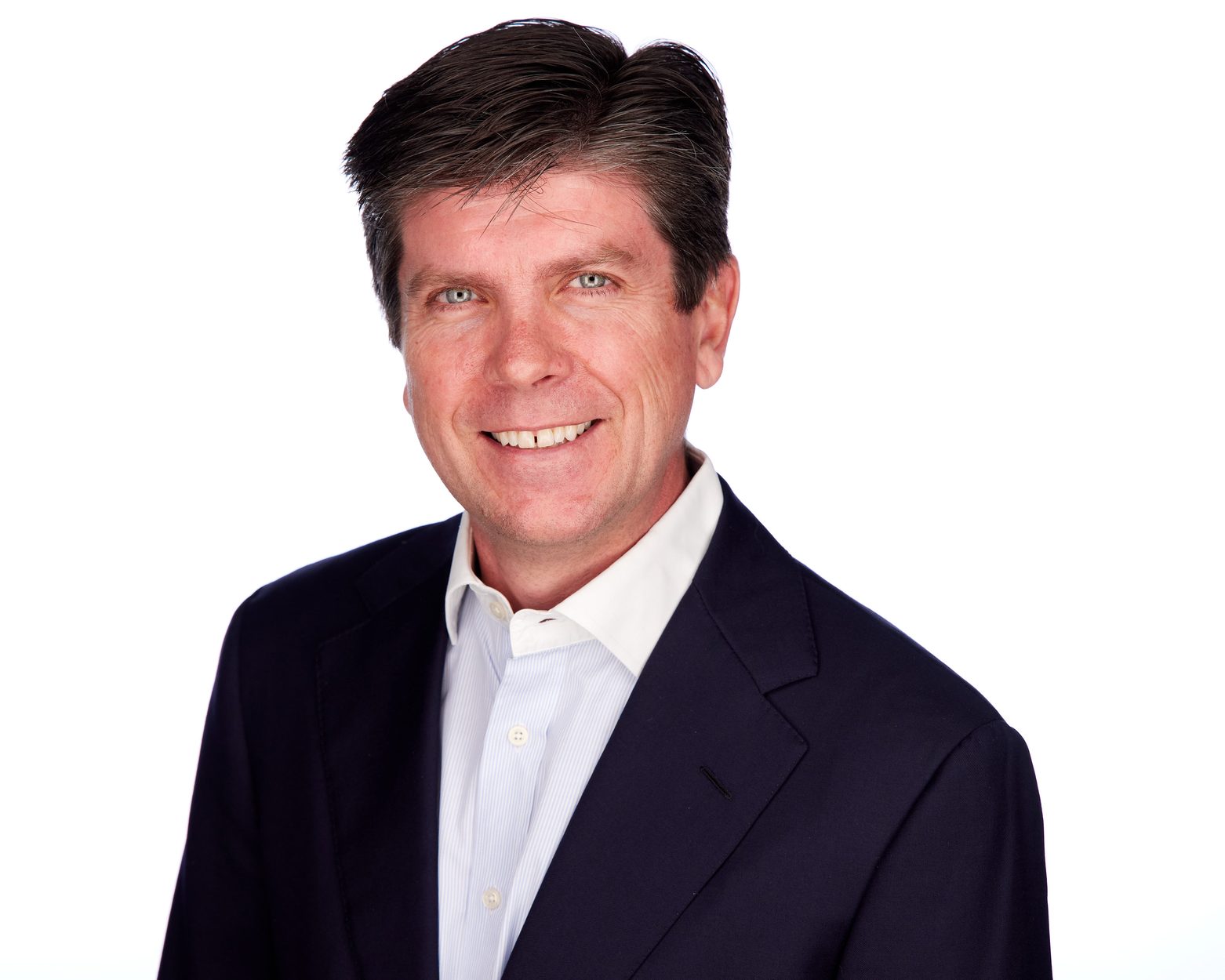
As long on the mat as in the boardroom.
The Financial Spine is the book he wishes he'd had: the difference between a strategy failing and the financial architecture underneath it failing — and the daily practice that keeps the structure sound.
Patrick has spent more than twenty years in finance and operations — at Webvan during the dot-com buildout, Honeywell, Accenture, and WattAnyWhere, the Swiss-French clean-energy startup he helped found. A graduate of the University of Notre Dame, he holds an MBA from Arizona State and a Master's in International Management from Thunderbird, and from 2020 to 2022 taught Business Operations in the University of Geneva's Executive MBA program. He lives in French-speaking Switzerland with his family.